
Adaptive contracting
A three part report series


In collaboration with

Series introduction
Organizations today are discovering that their approach to contracting was built for a world that no longer exists. Rigid structures designed for predictability now act as barriers to performance in an environment defined by volatility and continuous change.
This three-part report series, Adaptive Contracting, provides a roadmap for business process reinvention. We move from identifying the systemic failures of siloed operating models to exploring the transformative power of agentic AI and the new human-centric roles required to lead in a digital-first commercial ecosystem.
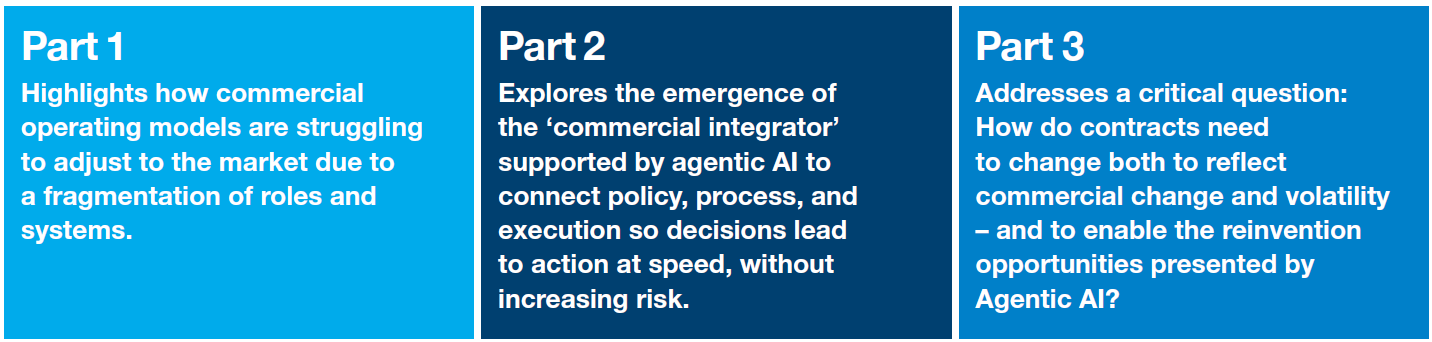
Part 1: Business process reinvention for contracting

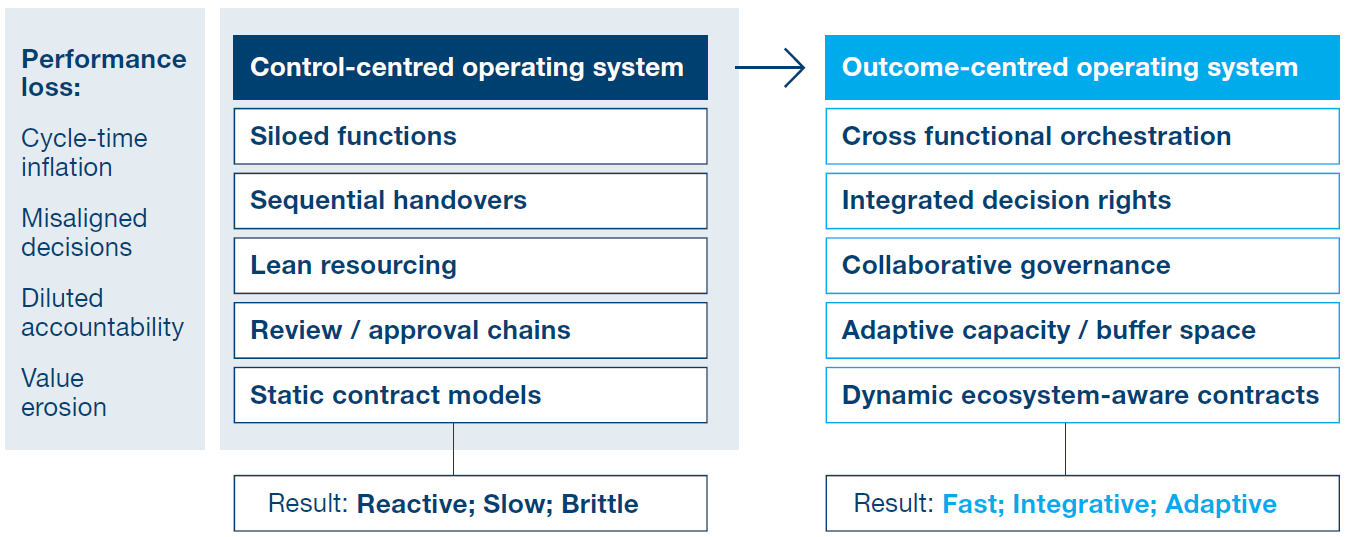
The contracting operating system shift
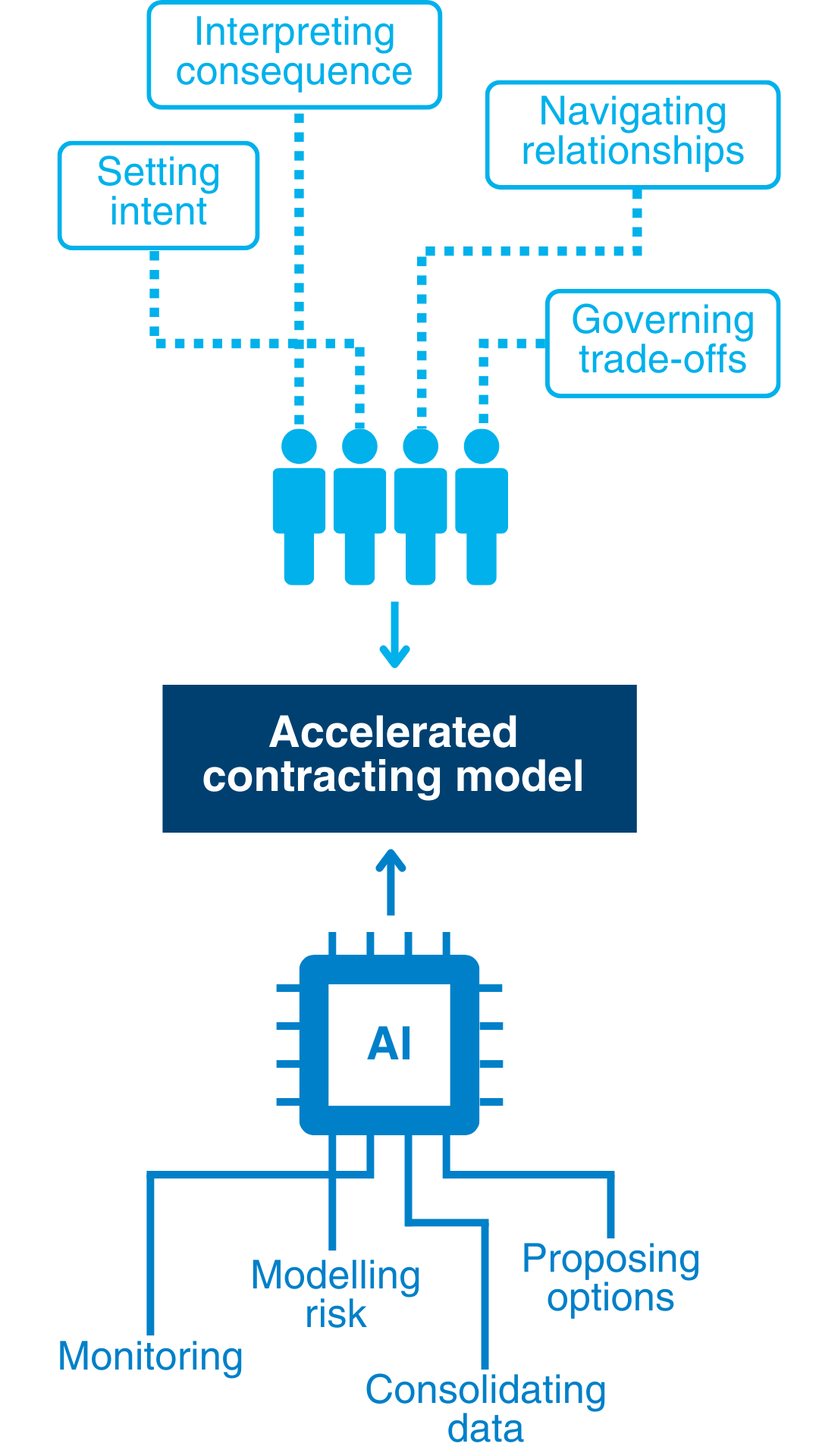
Part 2: Accelerated Contracting through Agentic AI
The human-machine system

Part 3: Contract design of the future
Contract adaptability requires explicit choices
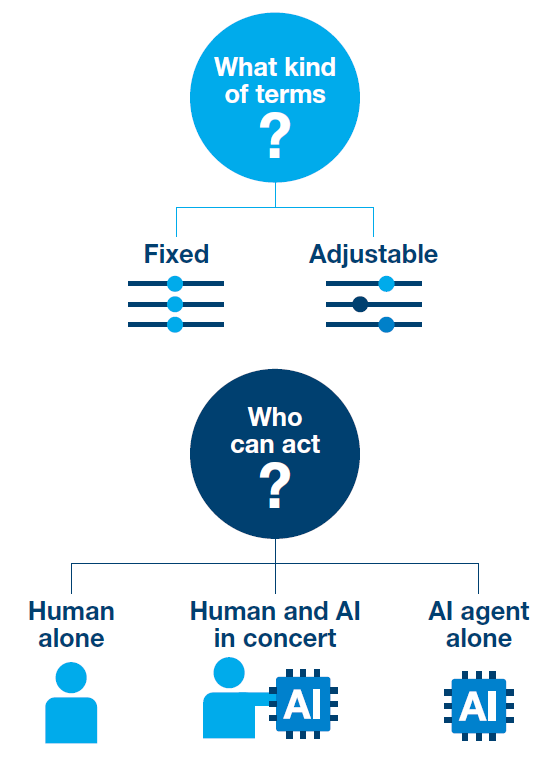
- Clearly identify obligations, options, and conditions
- Define measurable signals tied to performance or risk
- Link contractual provisions to operational actions.
- A pricing adjustment clause operates a trigger tied to verified data inputs
- A service-level failure generates an alert with defined enterprise actions or escalation paths (perhaps linking seamlessly via an orchestration agent across technology, CRM, contract and finance/billing systems)
- A variation mechanism initiates a controlled decision workflow, rather than an ad hoc negotiation.

Written by
Tim Cummins
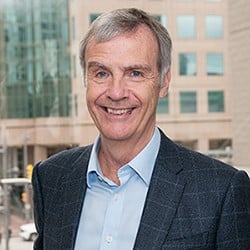
An international, cross-industry career that has moved from corporate management to extensive research, advisory and capability development services to public, private and third sector organisations. Tim has lived and worked in the UK, France (3 years), and the United States (20 years), building an impressive research and entrepreneurial record with a demonstrated commitment to delivering social benefit. As Founder and President of World Commerce & Contracting (formerly International Association for Contract & Commercial Management), Tim has built a 72,000-member worldwide non-profit association which increasingly influences commercial policies and contracting practices in major corporations and governments. In September 2019, he was presented with the Financial Times ‘Market Shaper of the Year Award. Tim was, until recently, Professor and Chair of International Commercial & Contract Management at the University of Leeds, School of Law, where he taught and led the development of inter-disciplinary commercial programs. Prior to founding World Commerce & Contracting, Tim was on the Chairman’s staff at IBM Corporation and led the development of worldwide commercial processes and skills. His early career included management roles in the banking, automotive and aerospace industries, where he led negotiations up to $1.5 billion in value. He has served in advisory roles for government departments in various countries, including the US, UK, Australia, Canada, and Japan.
Resources
From webinars to articles and events we have a whole host of resources to help you on your journey to AI excellence.
-1.png?width=700&height=394&name=AI%20in%20Contracting%202026%20-%20Cover%20(low)-1.png "AI in Contracting 2026 - Cover (low)-1")
AI in contracting 2026
Curious to see how the AI revolution in contracting has progressed? Download the 2026 report, "AI in Contracting: From experimentation to impact," for key insights and analysis that provide critical context for the latest Adaptive Contracting findings and strategic trends.

Articles
Our Content Hub boasts an extensive collection of AI articles, delving into the transformative impact on contracting and commerce. As leaders in the field, we offer valuable insights and thought-provoking content, illuminating AI's revolutionary potential in the contracting landscape.

AI Contracting Clinic
As AI's role grows, this clinic moves beyond buzzwords to show what actually works. This series offers live case studies, frameworks, debates and examples of real business impact. Join practitioners and experts to solve contracting problems with AI and help you understand where AI fits in your contracting lifecycle.
Become a member
Join now to access a range of benefits as part of the world's largest commerce and contracting community.
- Become part of a global community and connect with other members at events and on online forums.
- Participate in live webinars and sponsored webcasts with thought leaders and experts.
- Attend local networking groups and regional or international conferences.
- Access the latest research, reports, analytics, best practice templates and thought-leadership articles.
- Become certified with our globally recognized training programs.
- Gain one-on-one mentorship from our experts.
- Receive regular news and industry updates.
- Search and post jobs on our members job board.
- Raise your professional reputation by contributing to our Content Hub, joining working groups, speaking at conferences, and contributing to research.