
AI in contracting 2026
From experimentation to impact

In collaboration with


AI, adaptability, and the future of CCM
It’s the fourth year that WorldCC has reported on the role and impact of AI within the commercial and contract management process. During that time, we have monitored changing attitudes, a shift from optimism to skepticism, and now, a growing sense of practicality and realism.
These sentiments are mirrored across boardrooms, as AI moves from experimentation to expectation. CEO studies by EY and PwC show senior leaders increasingly viewing AI as central to productivity, resilience, and competitive advantage in an environment of continuing uncertainty - a world defined by volatility, geopolitical disruption, regulatory change, and supply chain fragility.
Yet these same studies reveal an unresolved tension, as this latest WorldCC study directly confirms. While executives are pushing for faster, better decisions, many organizations lack the operating models, data foundations, and governance structures required to deliver them. Indeed, the 2025 WorldCC Benchmark Report found that almost 80% of the organizations surveyed are struggling to develop the adaptability needed to operate effectively in today’s market conditions. Transformation is constrained by execution capability.
Contract and commercial management (CCM) sits at the heart of this challenge and represents a critical insight into the dilemma facing business executives. For many, contract management is seen as a standardized activity, a prime candidate for full automation. On one level, they are right -but this is a story of transformation, not elimination. Contracts govern how organizations commit resources, manage risk, respond to change, and realize value. If AI is to improve decision-making at scale, it must work through a contracting system designed to enable, rather than a compliance model that operates as a bottleneck. Simply moving today’s contract management tasks into AI systems will add to inflexibility and expose process inadequacies. AI represents an opportunity for fresh thinking and value uplift, an opportunity for broad organizational efficiencies. Indeed, if we summarize the findings of this study, we find:
“When respondents are forced to prioritize value, they consistently rank capability, innovation, and productivity above cost reduction or compliance. This suggests organisations see modern contract management as an efficiency tool, but as an enabler of better commercial decisions and strategic capacity.”
Listen to Tim and Bernadette introduce the report’s theme: AI and the future of CCM

Tim Cummins
Executive Director, CCM Institute

Bernadette Bulacan
Chief Evangelist, Icertis
This report brings together three perspectives:
-
CEO expectations from global studies,
-
Practitioner experience from WorldCC’s 2026 AI survey across buy-side and sell-side CCM professionals,
-
Operational reality and future aspiration from the WorldCC2025 Global CCM Benchmark and other related studies.
Together, they provide a holistic view of where commercial and contract management capabilities stand today, and how they must change to meet business needs and executive priorities.
AI in contracting 2026
From experimentation to impact


The evolving story of AI
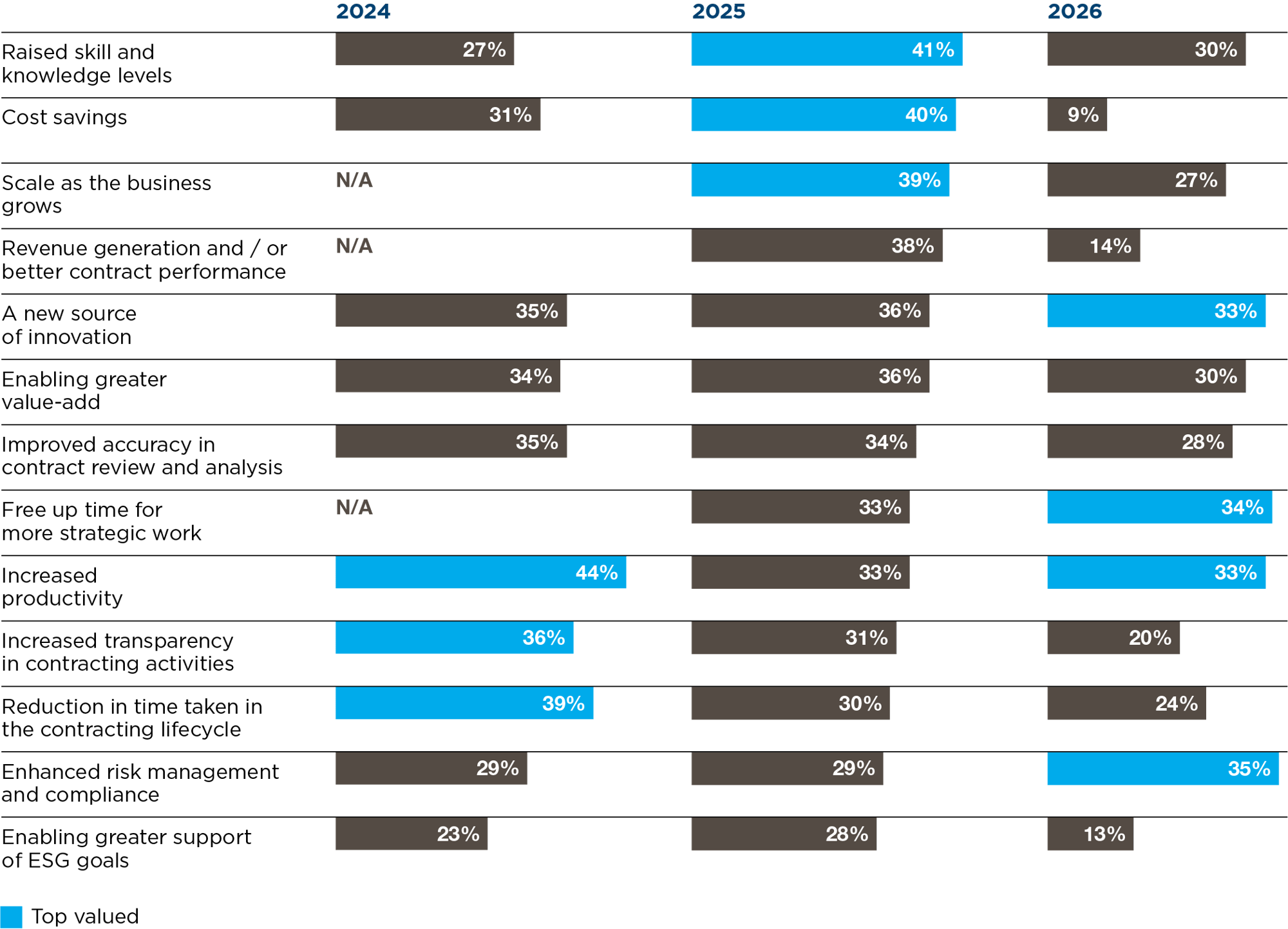
As the figure ' Practitioners expectations of the benefits of AI'shows, back in 2024, ‘increased productivity ' was the top realized benefit, cited by 44%. The data suggests practitioners now value accuracy and strategic time allocation more highly than pure productivity gains. The latest ranking of user benefits represents a positive endorsement of AI.
Practitioners expectations of the benefits of AI
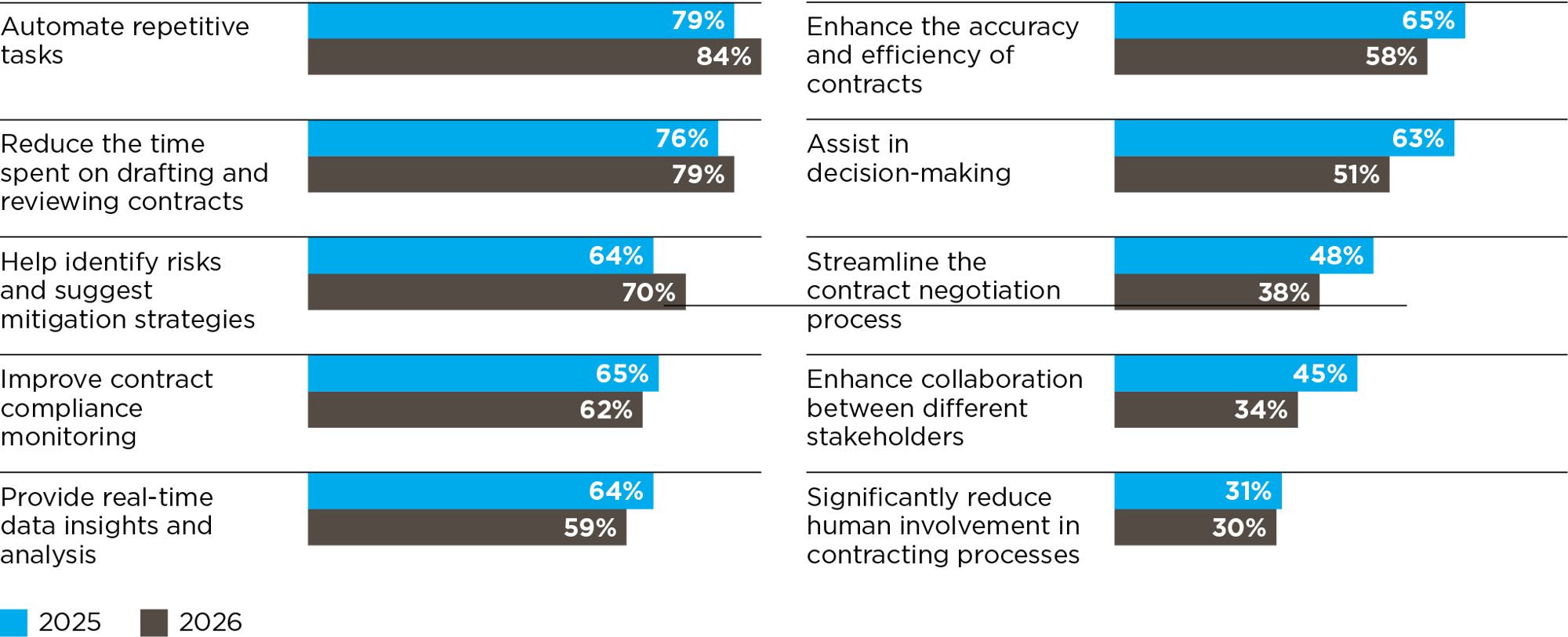
Impact of AI on daily tasks in contracting
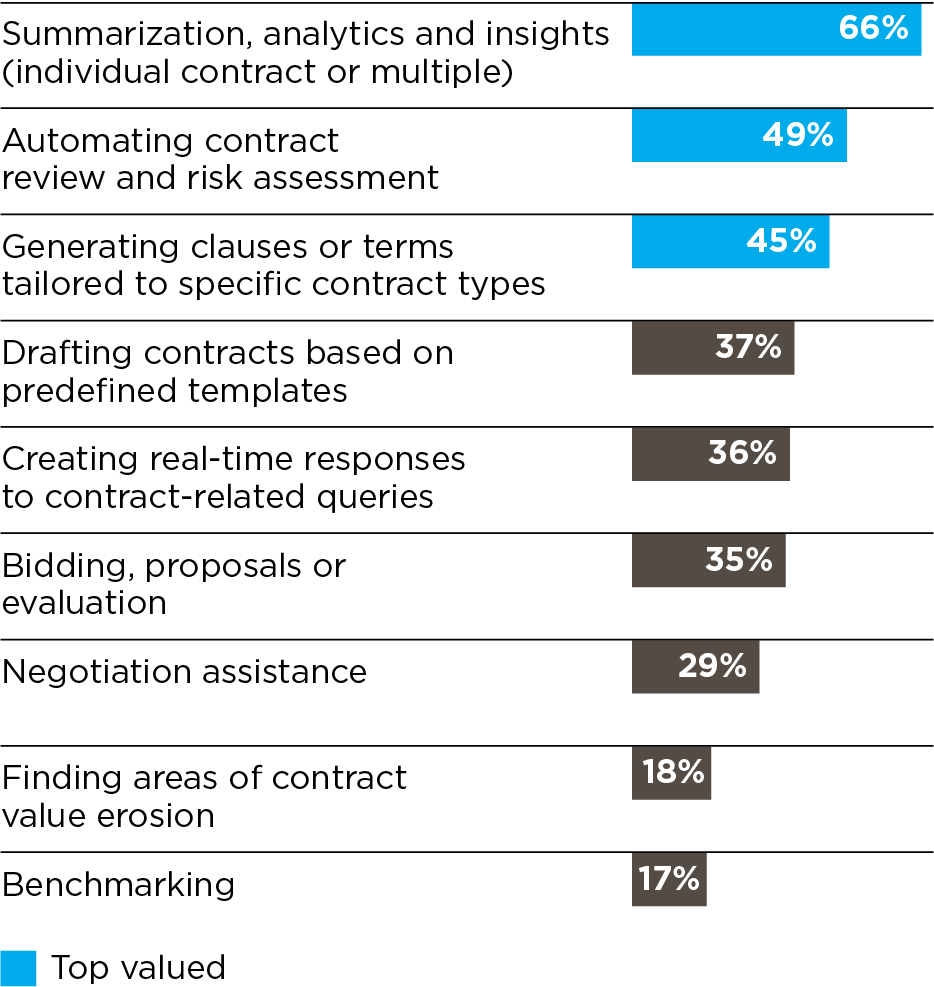
Where Generative AI (GenAI) is being used
Looking to the future
To support this shift, the aspirations for implementation priorities represent a significant change from current implementation patterns. The data reveals that practitioners are looking beyond the basic AI capabilities they’re currently using (such as metadata extraction and clause extraction) toward more strategic, value-driven applications, see the 'Top 5 AI implementation priorities' figure.
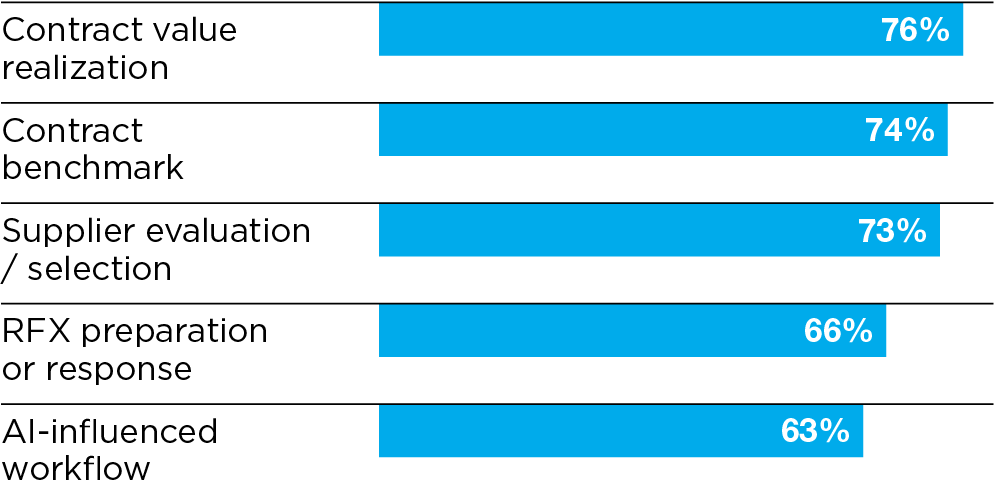
The emphasis on Contract benchmark and Supplier evaluation / selection further reinforces practitioners’ aspirations to use AI for more strategic and better informed decision-making rather than just operational efficiency. These capabilities would enable organizations to make more informed contracting decisions based on comparative data and supplier performance analytics.
While current AI use cases tend to focus on ‘safe space’activities like contract summarization and metadata extraction, practitioners’ aspirations show they’re ready to embrace AI for more complex, strategic functions that require greater confidence in AI outputs.

Leandro Doca
Vice President, Head of CCM for Americas Strategic Business Unit, Capgemini

Carolina Colombo
Contract Negotiator, Senior Manager,
Avaya

Daniel J. Finkenstadt, PhD
Vice President of Research and Senior Fellow, CCM Institute
AI in contracting 2026
From experimentation to impact
Conclusion
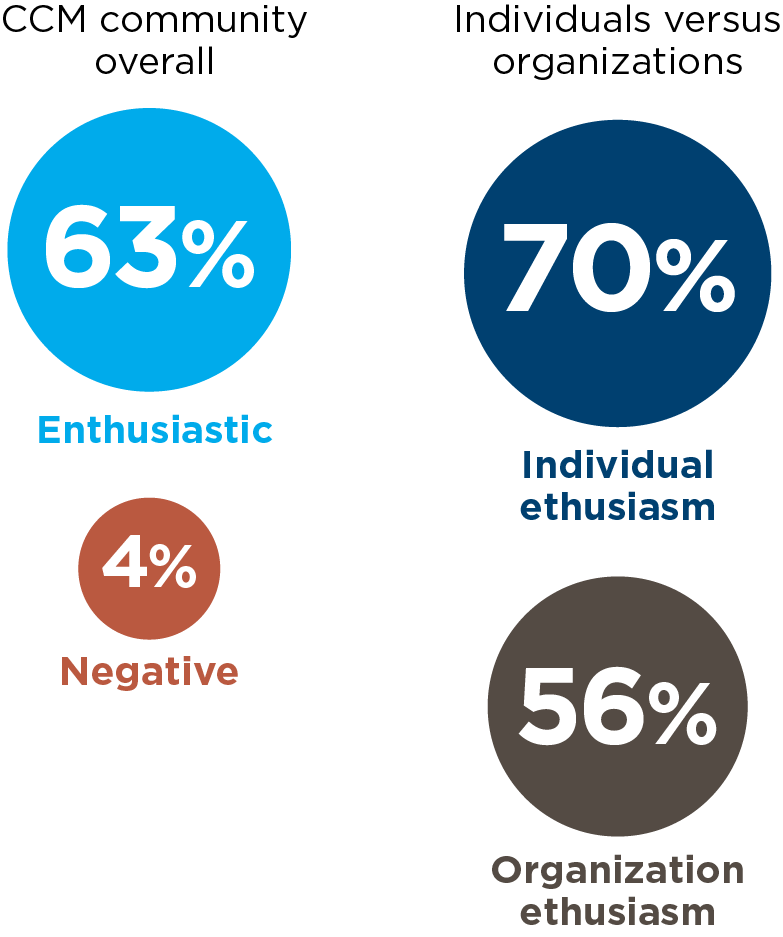
Taken together, these findings suggest that AI in contract and commercial management has moved beyond experimentation but has not yet reached institutional maturity. Individuals are already finding value in AI-enabled tools, yet organisations are struggling to translate that experience into scalable, governed capability.
Written by
Tim Cummins

An international, cross-industry career that has moved from corporate management to extensive research, advisory and capability development services to public, private and third sector organisations. Tim has lived and worked in the UK, France (3 years), and the United States (20 years), building an impressive research and entrepreneurial record with a demonstrated commitment to delivering social benefit. As Founder and President of World Commerce & Contracting (formerly International Association for Contract & Commercial Management), Tim has built a 72,000-member worldwide non-profit association which increasingly influences commercial policies and contracting practices in major corporations and governments. In September 2019, he was presented with the Financial Times ‘Market Shaper of the Year Award. Tim was, until recently, Professor and Chair of International Commercial & Contract Management at the University of Leeds, School of Law, where he taught and led the development of inter-disciplinary commercial programs. Prior to founding World Commerce & Contracting, Tim was on the Chairman’s staff at IBM Corporation and led the development of worldwide commercial processes and skills. His early career included management roles in the banking, automotive and aerospace industries, where he led negotiations up to $1.5 billion in value. He has served in advisory roles for government departments in various countries, including the US, UK, Australia, Canada, and Japan.
Bernadette Bulacan

Resources
From webinars to articles and events we have a whole host of resources to help you on your journey to AI excellence.

AI adoption in contracting 2025
Curious to see how the AI revolution in contracting has progressed? Download the 2025 report, "AI in Adoption in Contracting: Aspiration and excitement tempered by the demands of achieving successful adoption," for key insights and analysis that provide context for the latest 2026 findings.

Articles
Our Content Hub boasts an extensive collection of AI articles, delving into the transformative impact on contracting and commerce. As leaders in the field, we offer valuable insights and thought-provoking content, illuminating AI's revolutionary potential in the contracting landscape.

AI Contracting Clinic
As AI's role grows, this clinic moves beyond buzzwords to show what actually works. This series offers live case studies, frameworks, debates and examples of real business impact. Join practitioners and experts to solve contracting problems with AI and help you understand where AI fits in your contracting lifecycle.
Become a member
Join now to access a range of benefits as part of the world's largest commerce and contracting community.
- Become part of a global community and connect with other members at events and on online forums.
- Participate in live webinars and sponsored webcasts with thought leaders and experts.
- Attend local networking groups and regional or international conferences.
- Access the latest research, reports, analytics, best practice templates and thought-leadership articles.
- Become certified with our globally recognized training programs.
- Gain one-on-one mentorship from our experts.
- Receive regular news and industry updates.
- Search and post jobs on our members job board.
- Raise your professional reputation by contributing to our Content Hub, joining working groups, speaking at conferences, and contributing to research.