
Public Sector contracting in Australia and New Zealand:
2025 Benchmark insights

In collaboration with
Developed by


Executive summary
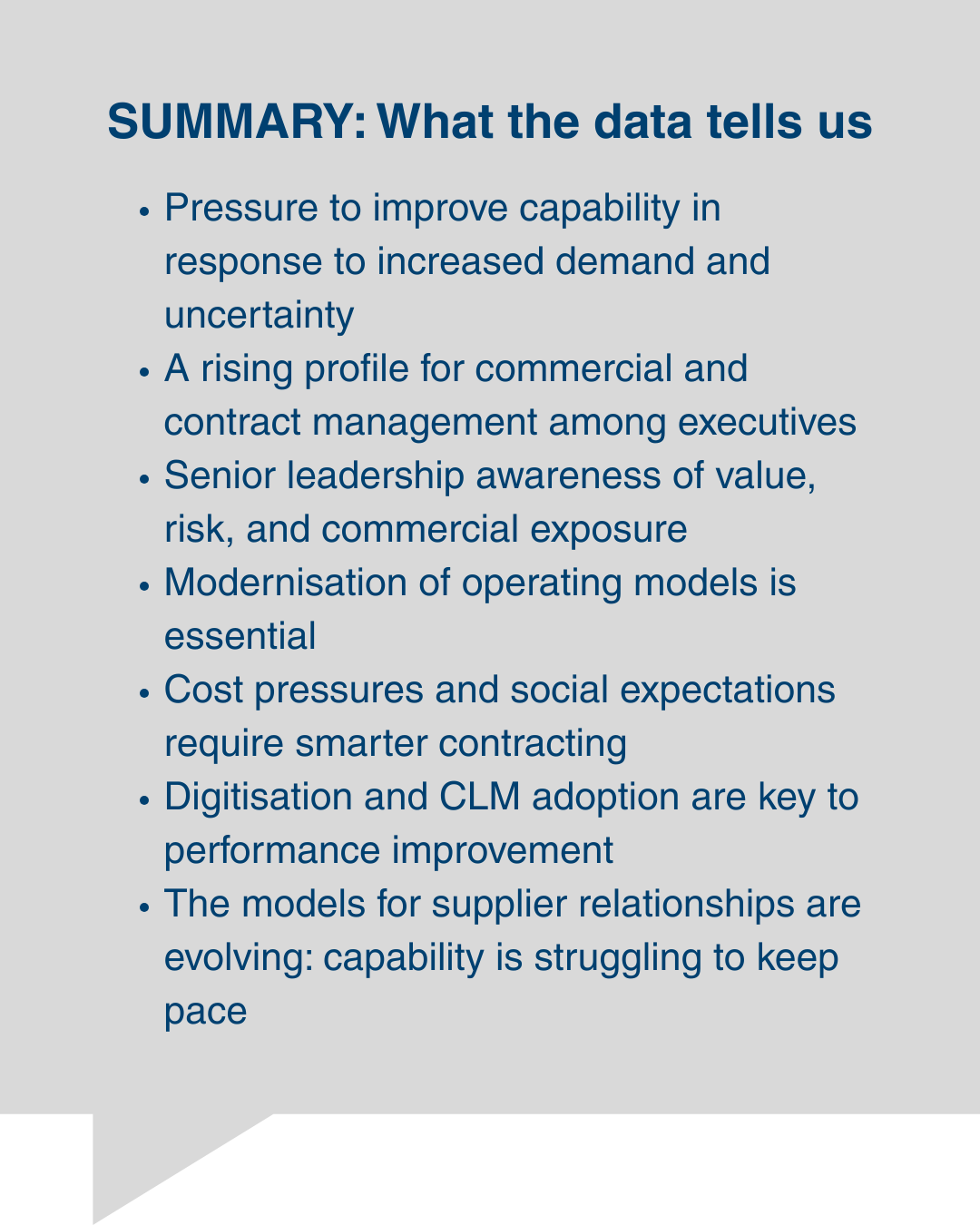
The public sector in Australia and New Zealand is under pressure to deliver more value at lower cost and greater speed. In both countries, recent Government announcements recognise the key role of public procurement in delivering the political agenda for improved social outcomes. Contracting is increasingly a focus, sitting at the heart of successful reform and delivery – arguably, it represents a catalyst for change.
The summary indicates the need for reform. To meet these demands, Procurement and contract management teams need support, especially since they are simultaneously addressing unprecedented levels of market disruption and uncertainty. Conditions are similar elsewhere in the world, yet as this report explains, there are characteristics specific to the Australian and New Zealand environment.
Contributors to this study tell us that uncertainty is almost 40% above levels they consider ‘normal’, driven by a mix of market, economic, regulatory and technological factors. Underlying capabilities were not designed for this: public procurement is based on rules, assumptions of control and the oversight of compliance. Contracts are based on templates which are designed to transfer risk; resources are trained to value compliance and to monitor, rather than actively manage, performance; and technology, to the extent it exists, is fragmented. Together, these factors result in low levels of adaptability and a contracting process that was designed for very different conditions.
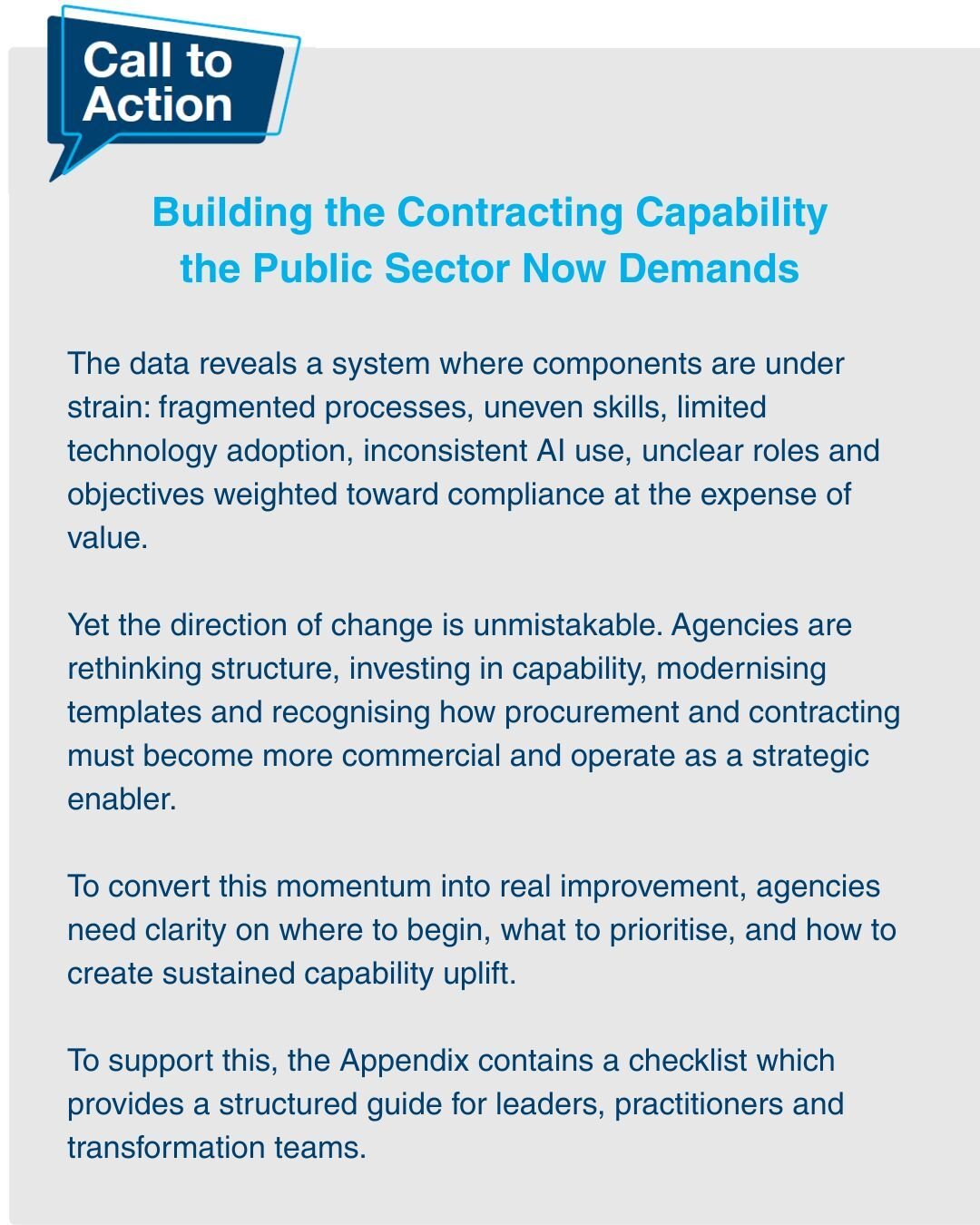
This report is a ‘call to action’. It confirms the need for change and the dependency on investment. Contracting, the lifecycle from requirement to outcome, is today a constraint, a barrier to meaningful reform. It needs urgent attention.
Public Sector contracting in Australia and New Zealand:
2025 Benchmark insights


Overview of Current State
This difference has resulted in a greater sense of ownership and accountability, together with less confusion over roles and responsibilities, these support greater adaptability, though there is continued need for improvement, especially within smaller agencies and in terms of technology adoption.
Australia’s focus on capability uplift is more recent and at this point less structured. Levels of support for change and consistency of approach vary across agencies, resulting in wide variations in performance.
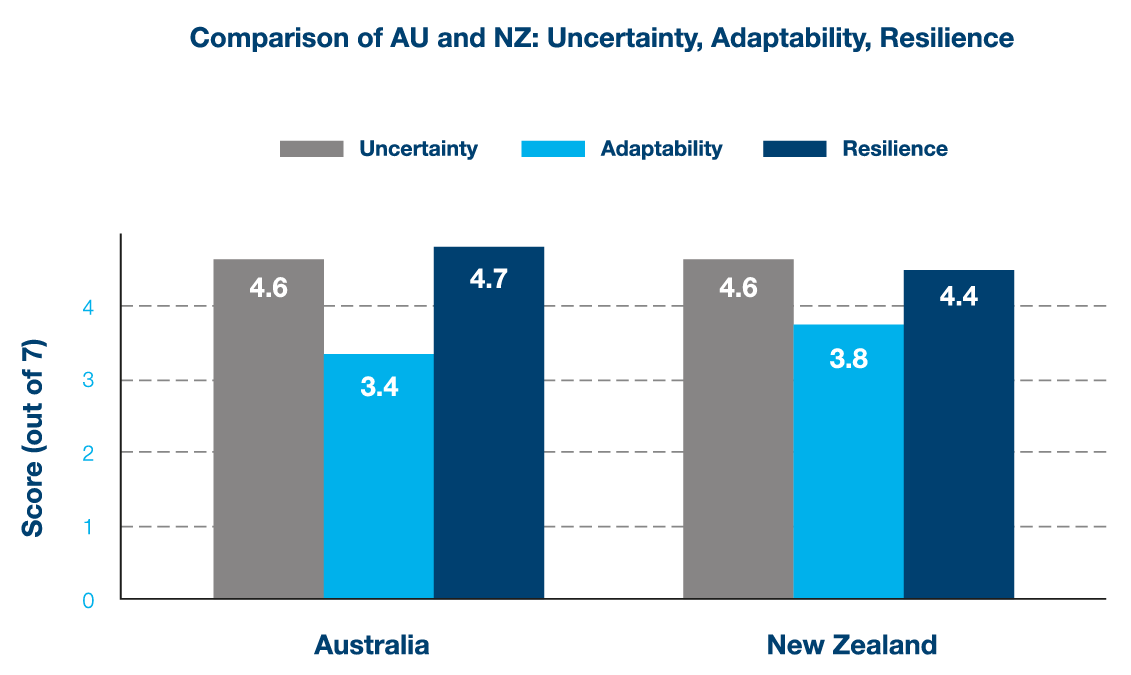
As a result, adaptability is not an embedded capability. In Australia, it scores 3.4 out of 7 and in New Zealand 3.8 (in both cases falling short of the international cross-industry average of 4.2). A control-based model also tends to create an illusion of resilience, which New Zealand scored at 4.4 and Australia 4.7 out of 7 (significantly above the international cross-industry average). The benchmark performance data from ANZ illustrates the point that rules do not translate in themselves to resilience: cycle times are long, decision rights are confused, data is fragmented, and learning from experience is not widespread.
Key takeaways
- The "illusion of resilience" in public sector contracting: While highly regulated environments often feel safe, the report uncovers a critical paradox: strict compliance does not equal resilience. The data shows a clear correlation between rigid rules and a lack of adaptability. While Australian and New Zealand agencies report high "perceived" resilience, their actual ability to adapt to market disruption scores significantly lower than the international cross-industry average.
- Australia vs. New Zealand: a tale of two strategies: The report reveals a distinct divergence in maturity between the two nations. New Zealand is demonstrating higher levels of adaptability (3.8/7) compared to Australia (3.4/7). This is largely driven by a centralized "Head of Procurement" in New Zealand which creates greater clarity in roles and accountability, whereas Australia’s approach remains more fragmented.
- Adaptability overtakes negotiation: The skills landscape has shifted dramatically. "Adaptability" has emerged as the single most critical capability for the next five years, cited by 77% of practitioners. This now significantly outranks traditional core competencies like negotiation (54%) and complex problem solving (46%).
- The "digital deadlock" blocking AI adoption: Despite the hype around AI, the public sector remains stuck in a cycle of underinvestment. A staggering 57% of respondents report no dedicated budget for contract management systems. This lack of foundational funding creates a bottleneck that prevents agencies from leveraging advanced automation, with 46% stating AI is merely "under review" rather than in use.
- Contract simplification: the untapped efficiency lever: While process improvement is a top priority, the research identifies a faster route to efficiency: contract redesign. Agencies that have simplified contract design and structure have realized cycle time reductions of 50-60%, alongside reduced operational risk. Yet, full redesign remains rare in the ANZ public sector.
- ESG: moving from aspiration to accountability: Public sector contracting is pivoting from including ESG as a "compliance checkbox" to treating it as a measurable outcome. The region is moving toward evidence-based tracking, such as scoring emission reductions directly in tender evaluations, rather than relying on aspirational policy statements.Here are the key takeaways formatted as requested, with the bold headers in sentence case.
Next steps: Conclusion
Public Sector contracting in Australia and New Zealand
2025 Benchmark insights
Written by

An international, cross-industry career that has moved from corporate management to extensive research, advisory and capability development services to public, private and third sector organisations. Tim has lived and worked in the UK, France (3 years), and the United States (20 years), building an impressive research and entrepreneurial record with a demonstrated commitment to delivering social benefit. As Founder and President of World Commerce & Contracting (formerly International Association for Contract & Commercial Management), Tim has built a 72,000-member worldwide non-profit association which increasingly influences commercial policies and contracting practices in major corporations and governments. In September 2019, he was presented with the Financial Times ‘Market Shaper of the Year Award. Tim was, until recently, Professor and Chair of International Commercial & Contract Management at the University of Leeds, School of Law, where he taught and led the development of inter-disciplinary commercial programs. Prior to founding World Commerce & Contracting, Tim was on the Chairman’s staff at IBM Corporation and led the development of worldwide commercial processes and skills. His early career included management roles in the banking, automotive and aerospace industries, where he led negotiations up to $1.5 billion in value. He has served in advisory roles for government departments in various countries, including the US, UK, Australia, Canada, and Japan.
Resources
We have a whole host of resources to help you on your journey to Commercial and contracting excellence.
Contract Management Standard (CMS)™
The Benchmark Report 2025 highlights a lack of consistency and accountability in contracting. The CMS is the globally recognized, definitive framework that provides a common language and a structured view of the contract lifecycle (pre-award, award, and post-award) required to drive consistency and achieve better outcomes.
Latest Research
Curious about the shifting landscape of contracting? Dive into our latest research. Get cutting-edge insights on current trends, innovations, and the practical implications for commercial and contract management, examining both today's applications and tomorrow's possibilities.

Capability Maturity Analysis (CMA) and Benchmark
The Benchmark 2025 report is an aggregate analysis. The individual CMA is the practical tool for organizations to take the next step: gaining a fact-based view of their own current performance against industry norms and world-class standards. The report identifies a growing performance gap; the CMA helps an organization see exactly where it stands.

Articles
Our Content Hub boasts an extensive collection of AI articles, delving into the transformative impact on contracting and commerce. As leaders in the field, we offer valuable insights and thought-provoking content, illuminating AI's revolutionary potential in the contracting landscape.

CCM Associate Program & Certification
The report notes misalignment in priorities, where organizations want strategic relevance but de-prioritize talent development. The CCM Associate program addresses the need to develop a foundational skillset aligned with the CMS, making it an ideal first step for upskilling teams to manage the complexity and uncertainty highlighted in report.

Events
Join us for a variety of in-person and online events, from dynamic weekly thought leadership webinars and digital takeovers to our regional member meetings. Don't miss the chance to connect with the global community at one of our essential global annual summits.
Become a member
Join now to access a range of benefits as part of the world's largest commerce and contracting community.
- Become part of a global community and connect with other members at events and on online forums.
- Participate in live webinars and sponsored webcasts with thought leaders and experts.
- Attend local networking groups and regional or international conferences.
- Access the latest research, reports, analytics, best practice templates and thought-leadership articles.
- Become certified with our globally recognized training programs.
- Gain one-on-one mentorship from our experts.
- Receive regular news and industry updates.
- Search and post jobs on our members job board.
- Raise your professional reputation by contributing to our Content Hub, joining working groups, speaking at conferences, and contributing to research.